How to make a family tree, in six steps
To make a family tree, start with yourself, add your parents and siblings, then branch out one generation at a time. Record marriages as the joints the children hang from, add photos and stories so it feels like a family rather than a chart, and invite relatives to keep their own branches current. The six steps below take most families about an afternoon.
Step 1: Choose where your tree will live
Paper and posters are lovely but freeze the moment they're printed. A spreadsheet works until the second person needs to edit it. For a tree the whole family can see and help tend, pick an online home that is private, free to start, and easy on phones, since that is where your family will actually open it.
Step 2: Start with yourself
Every tree grows from a root. Add yourself first with the basics: name, birthday, where you live. Then add your parents and siblings. Ten minutes of what you already know, no research required.
Step 3: Branch out one generation at a time
Add your grandparents next, then aunts, uncles, and cousins. Work generation by generation rather than chasing one line back as far as it goes; the tree stays balanced and you notice the gaps. When you hit one, that is a phone call to a relative who will be delighted to be asked.
Step 4: Mark the unions that shape the tree
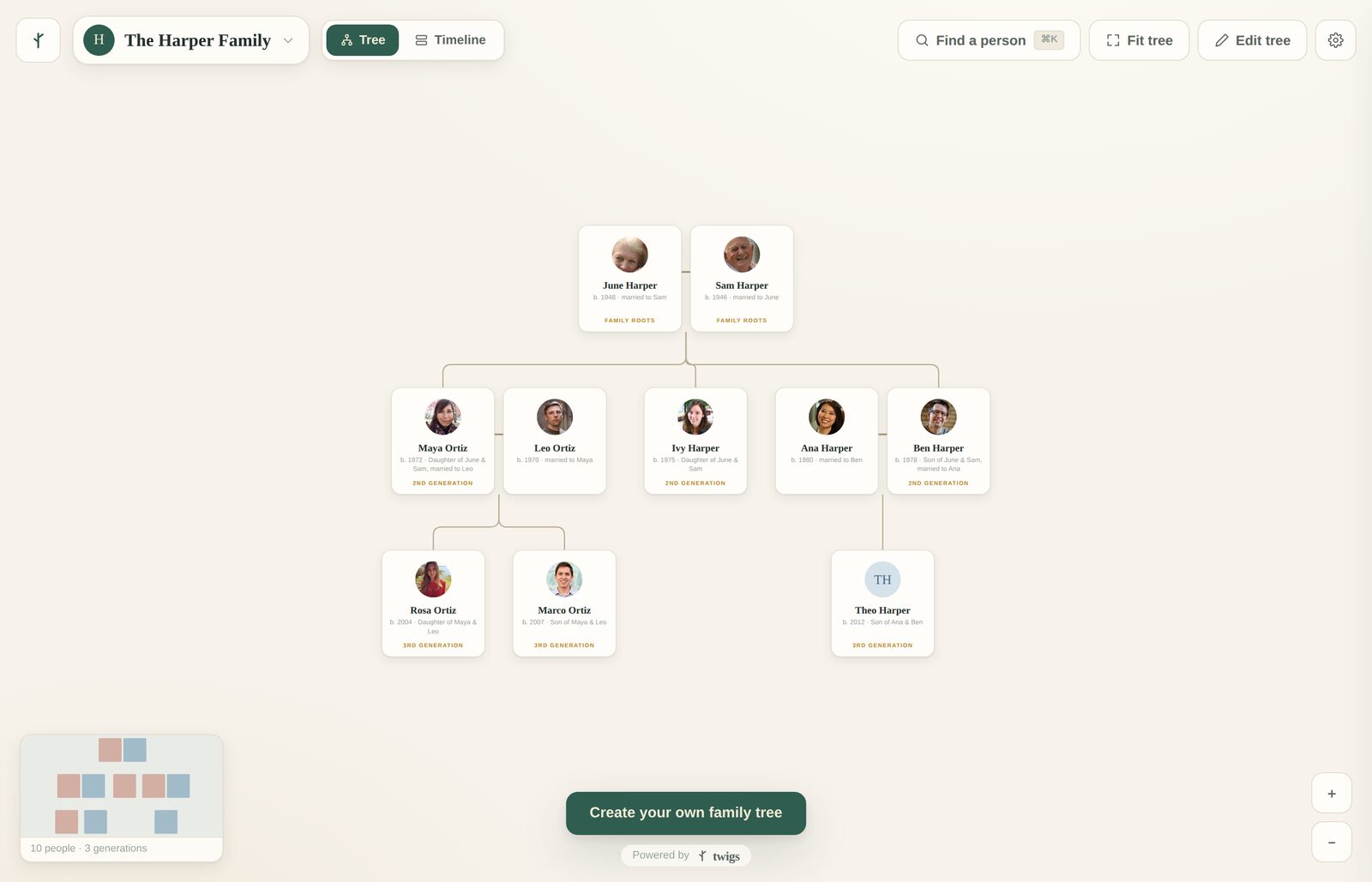
Marriages and partnerships are the joints of a family tree: children hang from couples, not from individuals. Record anniversaries where you know them, and don't shy away from real family shapes: remarriages, blended families, and partners all belong on an honest tree.
Step 5: Add photos and stories
Names and dates make a chart; photos and stories make a family. A portrait for each person changes everything, and a handful of moments (the wedding under the maple, the move to Denver, the blue-ribbon pie) turns the tree into something relatives open for fun.
Step 6: Invite the family to keep it alive
The trees that thrive are the ones nobody maintains alone. Share the tree with the family and let each relative claim their own card, fix their own details, and add their own moments. New babies, new marriages, and new cities then show up on their own.
How far back should you go?
As far as living memory reaches, then stop and enjoy it. Three or four generations (you, your parents, grandparents, and great-grandparents) covers everyone your family has stories about. Going further back is genealogy research, a wonderful hobby with its own tools; it is not required for a family tree that brings the living family together.
What information belongs on each person?
Start with full name, birth date, and the couple each person belongs to. Add where they live, what they do, a portrait, and a nickname if that is what everyone actually calls them. For relatives who have passed, birth and death years and a line of remembrance, with an obituary link if one exists, keep their place on the tree with dignity.
Ready to plant yours?
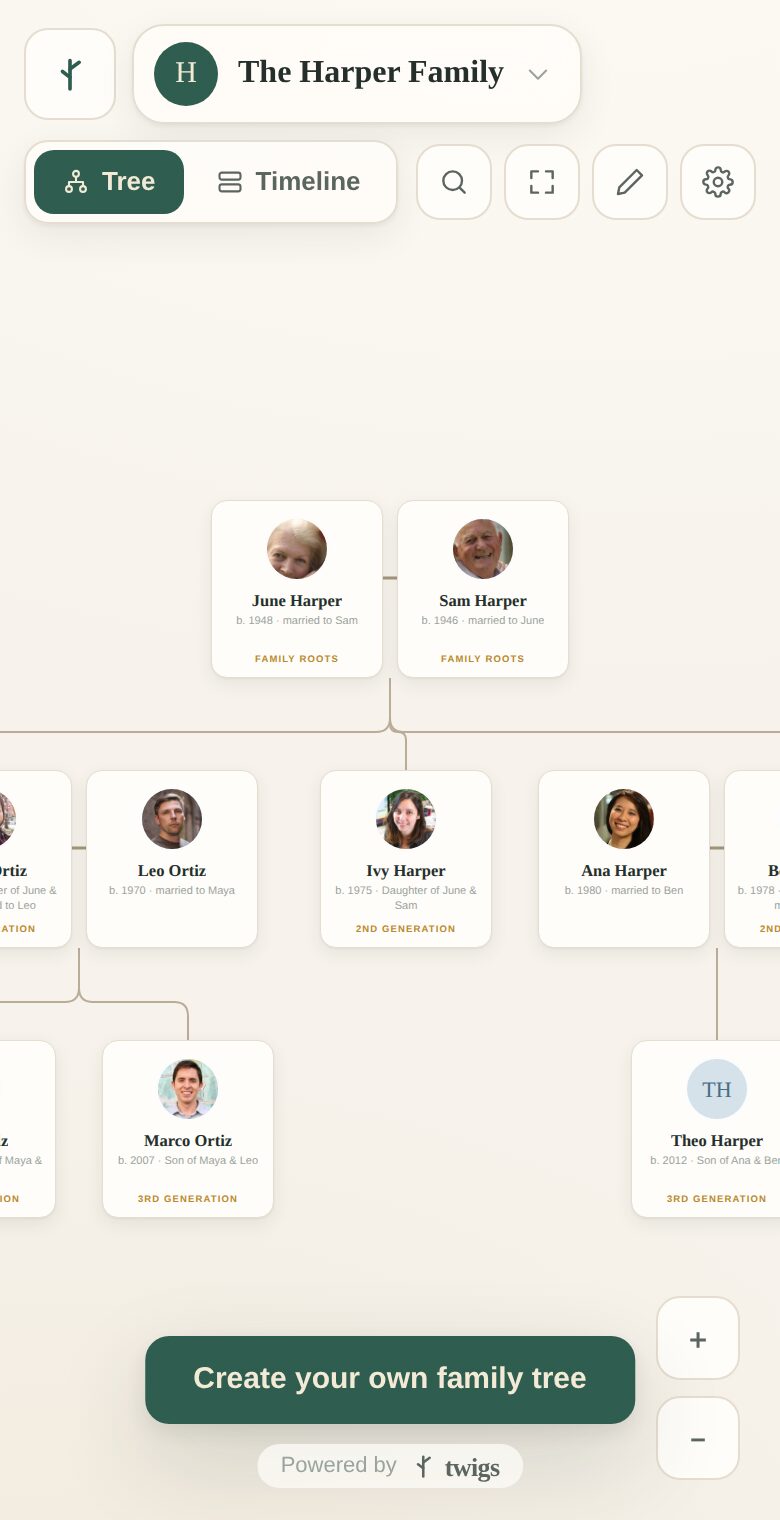
Twigs walks you through these exact steps: you and your household first, then branches, photos, and moments, with the whole family invited to help. Already have a tree on paper? Upload a photo of it and Twigs drafts the whole thing for you to review. Free to start, private behind your family's own password.